5GHz WiFi Antenna
High-performance 5GHz WiFi antenna solutions for high-speed wireless networks,
point-to-point links, and enterprise communication systems.
Common Deployments
where 5GHz WiFi antennas are used
High-Speed Networks
Enables high-speed data transmission for enterprise-grade wireless communication systems.
WISP Networks
Supports wireless ISP deployments for efficient last-mile internet connectivity.
Point-to-Point Links
Provides stable long-distance wireless connections for point-to-point bridge communication.
Dense Wireless Environments
Optimized for high-density environments with multiple devices and reduced interference performance.
Video Transmission Systems
Ensures reliable and low-latency wireless video transmission for surveillance and streaming systems.
Outdoor Backhaul Networks
Delivers high-capacity wireless backhaul links for outdoor base stations and network infrastructure.
Overview
Professional 5GHz WiFi Antenna Solutions
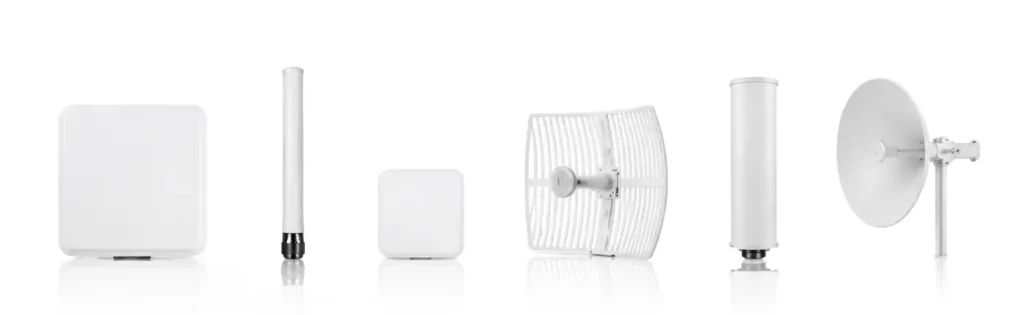
5GHz WiFi antenna is designed for high-speed and low-interference wireless communication.
It is suitable for modern enterprise and industrial network applications requiring stable performance.
It is widely used in point-to-point links, wireless bridges, video transmission, and WISP networks.
Compared with 2.4GHz antennas, it delivers higher speed and better performance in dense environments.
Why Choose
Why Choose 5GHz WiFi antennas solutions
Higher Throughput
Supports high-speed data transmission for enterprise networks.
Less Interference
Operates in cleaner spectrum with reduced congestion.
Strong Bridge Performance
Ideal for long-distance point-to-point links.
Better Video Performance
Optimized for wireless surveillance systems.
More Channels
Provides multiple channel availability for stable networks.
Enterprise Ready
Designed for high-capacity business networks.
How to Choose the Right 5GHz Antenna
Indoor Wireless Coverage
For offices, hotels, and indoor areas requiring stable wireless access.
Point-to-Point Link
For connecting two locations over a long distance.
Multi-User Coverage
For WISP networks and outdoor coverage areas.
Targeted Area Coverage
For specific areas requiring directional signal coverage.
PERFORMANCE GUIDE
Key Factors Affecting 5GHz Wireless Performance
5GHz wireless performance depends on more than antenna gain. Proper deployment, signal path, and RF components all influence connection stability and transmission efficiency.
Deployment Height
Installing antennas at an appropriate height helps reduce surrounding obstacles and improves signal propagation. A higher installation position can provide better coverage, especially in outdoor wireless communication environments.
Directional Alignment
For directional 5GHz antennas, accurate alignment is important for maintaining stable wireless links. Proper positioning ensures that signal energy is focused toward the target area and improves long-distance transmission performance.
Clear Line of Sight
A clear signal path helps minimize attenuation caused by buildings, trees, and other obstacles. Therefore, maintaining line of sight is essential for reliable point-to-point wireless connections.
RF Cable Selection
RF cable quality and cable length can affect signal loss between the antenna and wireless equipment. Using suitable low-loss cables helps preserve transmission efficiency and maintain stable network performance.
Good Deployment Is Just as Important as Choosing the Right Antenna
Proper antenna placement, alignment, and cable selection help ensure stable, high-performance
wireless communication in both indoor and outdoor deployments.
COMPARISON
2.4GHz vs 5GHz WiFi Antennas
2.4GHz WiFi Antenna
Wider Coverage
Standard Speed
Better Penetration
Higher Interference
Fewer Channels
VS
- Coverage
- Speed
- Penetration
- Interference
- Channels
5GHz WiFi Antenna
Shorter Coverage
Higher Speed
Lower Penetration
Lower Interference
More Channels
Frequently Asked Questions – 5GHz WiFi Antenna
Find answers about performance, applications, and selection of 5GHz WiFi antennas.
Several factors influence overall wireless performance, including antenna gain, installation height, alignment, cable quality, surrounding obstacles, and interference from nearby devices. Environmental conditions such as buildings, trees, and metal structures can also weaken signal propagation. Proper antenna selection and careful installation are just as important as choosing the correct frequency, helping maintain reliable connectivity and consistent network performance.
Antenna gain changes the shape of the wireless coverage pattern rather than simply increasing coverage in every direction. Higher-gain antennas focus signals into a narrower beam, which can extend communication distance while reducing vertical coverage. Lower-gain antennas generally provide broader coverage over shorter distances. Choosing the appropriate gain based on your deployment environment usually delivers better results than selecting the highest gain available.
The main difference lies in how the wireless signal is distributed. Compared with standard-gain models, high-gain antennas focus more energy in a specific direction, making them suitable for long-distance communication and point-to-point links. By contrast, standard-gain antennas provide a wider coverage pattern for general wireless access and shorter-range deployments. Therefore, instead of simply choosing the highest gain, select an antenna that matches your coverage area, installation height, and network requirements.
A directional antenna is the better option when wireless signals need to reach a specific target over a longer distance. It concentrates energy into a narrower beam, helping improve signal strength and reduce interference. Omni antennas, by comparison, provide 360-degree coverage and are more suitable for offices, warehouses, and public areas where devices connect from multiple directions. The right choice depends on your deployment environment and coverage objectives.
Outdoor backhaul networks typically benefit from high-gain directional antennas, such as parabolic or panel antennas, depending on the required communication distance and coverage area. These antennas concentrate wireless energy toward a specific direction, improving signal strength and transmission efficiency. Selecting the right mounting hardware, RF cables, and installation position also plays an important role in achieving reliable outdoor network performance.
Yes, when paired with the appropriate directional antenna and installed correctly, 5GHz WiFi antennas can provide reliable long-distance wireless communication. Stable performance depends on maintaining a clear line of sight, selecting the appropriate antenna gain, and using low-loss RF cables. Environmental factors should also be considered, as physical obstacles and poor alignment may significantly reduce signal quality over extended distances.
Need the Right 5GHz WiFi Antenna Solution?
Contact our engineering team for professional 5GHz WiFi antenna recommendations and customized wireless solutions.
Expert Support
Engineering team support for antenna selection and deployment guidance.
Custom Solutions
Tailored 5GHz antenna designs for different wireless applications.
Reliable Quality
Strict quality control ensures stable and long-term performance.
Fast Response
Quick technical support and quotation response within 24 hours.